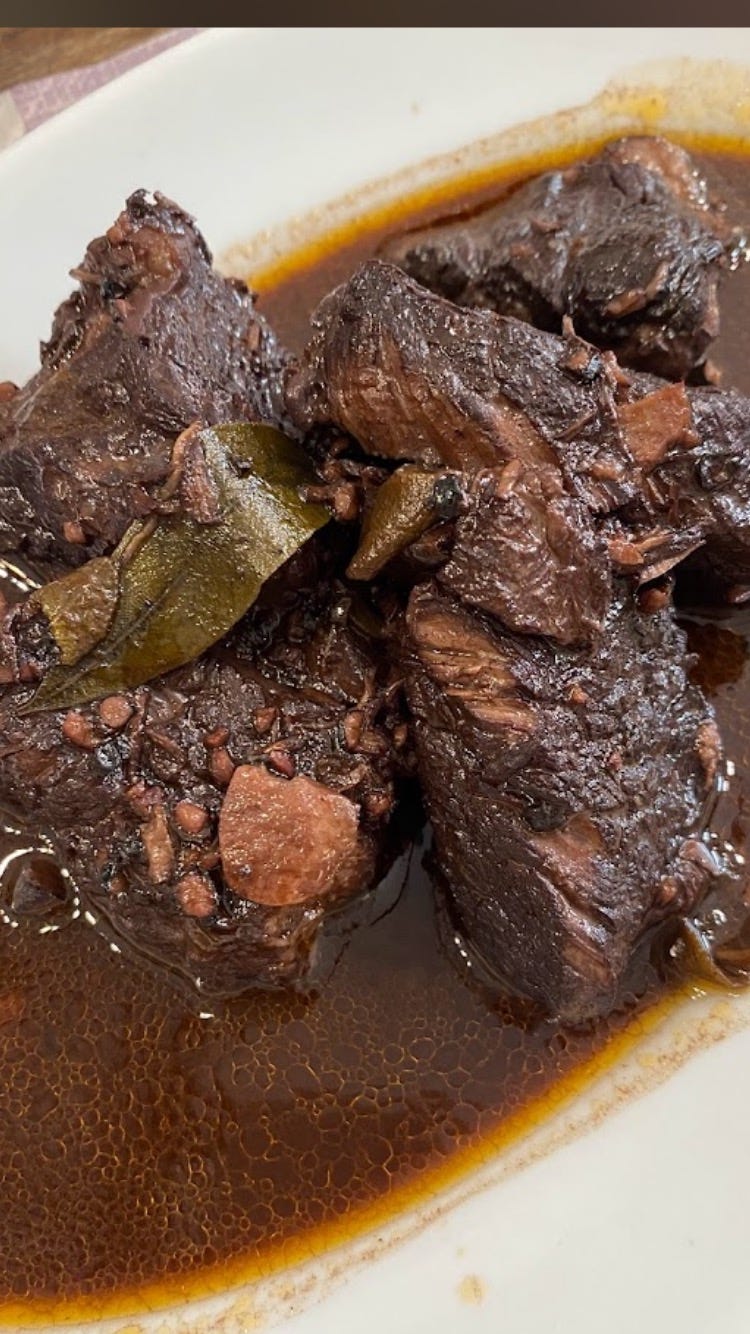
Peposa Recipe

1 kg beef shin (deboned) but keep the bone or 1 kg cheeks
100g concentrated tomato
5 big garlic cloves - crushed and peeled
1 tbsp fresh black pepper
Half a bottle of red wine
3 dry bay leaves
Salt
Method:
Before I get into the method, slow and low, let’s address the quality of the beef. The better the beef the better the stew. Check a few butchers and compare prices. Cheeks are more expensive than shin where I live and I prefer cheeks. This will taste better if you salt the meat for one day before cooking and if you eat it the day after it’s been cooked.
On the day you are ready to cook, wipe off the salt. In a pot where you can lay the meat flat add the rest of the ingredients and mix with your hands. If using shin add the bone into the pot. Cover the pot and bring to a simmer. Cook for three hours and check - if it needs longer leave for another hour. Add water or more wine if the liquid starts to disappear.
For the polenta
1 liter water and a big pinch of salt (taste the water)
250g polenta
30g butter
Bring the water to a steady boil and pour in the polenta slowly and whisk. When it starts to thicken use a wooden spoon. Serve straight away or pour into a tray lined with olive oil and let it set. Then grill or fry.
The story is usually before the recipe but here it is:
A long time ago my head chef at the time told me to take holidays. I had accrued too many days I hadn’t paid attention to. At the same time a friend of mine who worked with me was planning a trip to Florence. I hadn’t been to Italy but I drank a lot Campari and had read that they ate tripe for breakfast. He told me the Negroni was invented in Florence and stalls were selling sandwiches with lampredotto, the forth stomach of the cow- I booked a ticket.
On a Sunday morning we wandered the streets looking for lampredotto. We found Sergio Pollinis van outside Cibrèo with the shutters down. We had lunch at Cibrèo: raw sausage, stuffed squid, fried polenta and cheese, stewed veal. We speculated about the lampredotto van and worried maybe it was closed for holiday. Cheap Chianti, grappa and a visit to the birthplace of the Negroni, Caffè Giacosa, the day finished dipping cantucci into vin santo in a bar that no tourists would want to go in.
The next morning we went for coffee at Caffetteria La Loggia. Before the coffee we looked over at the van and there was a little crowd of people with newspapers in hand, plastic cups of wine and paninis. The week had started, men and women in suits, kids holding their hands, dogs following. The streets weren’t crowded yet. At Pollinis we joined the crowd and ordered our other reason for coming to Florence. We started each day the same way and for lunch we would choose somewhere based on instinct and the menu . We walked by Trattoria Sergio Gozzi on the way to have a drink one day. Read the menu, peered in the window, had the beer and went back. We ate fegatini, trippa alla Fiorentina, rabbit with rosemary roast potatoes and peposa.
Black pepper is often over used. People use it like salt. As a kid who experimented with lunch sandwiches, one of my favourites was a supermarket baguette, soft butter and ground pepper. I’d add ham when I was in Ireland, the ham was better there than where I was living.
The Peposa was spicy, they served it with polenta. Put it with rice and lime pickle and it would have been a curry. Be prepared when you make this - tone down the pepper the first time by a tablespoon to see. I found the recipe which this is based on in Beaneaters and Breadsoup by Lori de Mori and Jason Lowe. I would highly recommend this book. Many books have come out about Tuscany in the last ten years but this I still one of the favourites.